Drug availability in Swedish prisons
Three SecondsDrug availability in Swedish prisons is presented not as an isolated breach of security but as a condition the institution permits to persist. The book links prison drug use to dependence, debt, and reoffending after release, while its account of the fictional Aspsås Prison shows how drugs can become both a means of coping and a resource in the struggle for control. Its central contradiction is stark: the institution recognizes the harm yet, in the book’s closing factual commentary, is said to refrain from stopping the supply.
Use, dependence, and reoffending
The book’s closing commentary states that most prison inmates use drugs and that people serving prison sentences can continue using them inside. It connects this access to what happens after release: a person may return to crime to sustain an addiction and repay drug-related debts incurred in prison. Availability therefore extends the consequences of drug use beyond the sentence itself, linking the prison economy to renewed criminal activity outside.
This account makes supply a recurring institutional condition rather than a problem confined to individual contraband incidents. The prison is described as a closed system in which distribution could be stopped, but is not. The result is a cycle in which access inside can contribute to needs and debts that follow people beyond the prison gates.
Routes into a closed system
The book names several ways amphetamines can enter high-security prisons: concealed in bunches of yellow tulips sent to wardens, hidden in the margins of hardback library books, and carried in plastic bags placed at toilets. These examples contrast ordinary objects and routines with the illicit network they can serve. The account’s emphasis is not on a single breach but on the range of channels through which supply can persist despite the prison’s security and controlled environment.
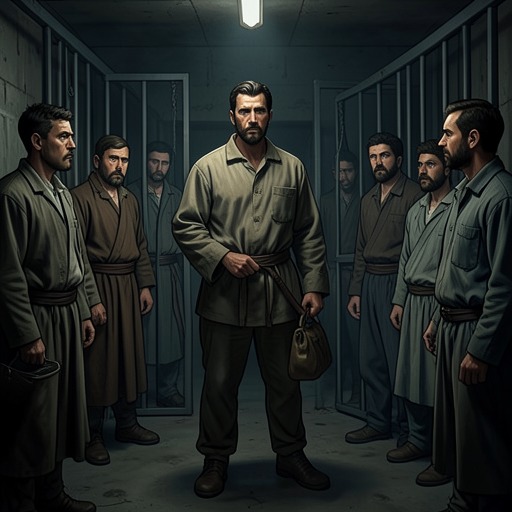
The fictional Aspsås Prison gives that wider claim a narrative setting. Before entering, Piet Hoffmann has studied the prison’s buildings and the people in its corridors; on arrival he is searched, issued clothes, and placed under tight control. Yet security measures do not remove the informal market. Hoffmann later uses forty-two grams of manufactured amphetamine at thirty percent strength to bring down three leading dealers, a step that advances his effort to take control of the prison’s drug trade. In this episode, drugs are not merely present in the prison: control of them changes the balance of power among prisoners.
Institutional tolerance and its costs
The book’s closing commentary argues that drug use can reduce anxiety. It also describes a practical institutional incentive for allowing supply to continue: without drugs, anxiety and disorder could increase, placing new demands on prison staff. Meeting those demands, the text argues, would require greater staff skill and competence at a cost society might not be willing to bear. Drug availability is thus framed as an expedient that shifts costs and risks rather than resolving them.
That explanation sharpens the book’s criticism of the Swedish Prison and Probation Service. The institution is portrayed as capable of stopping supply within a closed environment, yet unwilling to do so. The stated rationale is not that drugs are harmless, but that their absence could make prison life more difficult to manage. Tolerance consequently appears as a form of short-term control whose longer consequences include continued use, prison debt, and the possibility of renewed crime after release.
Fiction and factual framing
The book explicitly identifies Aspsås Prison as fictional, while presenting its closing discussion of prison drug use and institutional tolerance as factual commentary. The prison episodes should therefore be read as a narrative illustration, not as a report about an actual facility. Their significance lies in showing how a controlled setting can still contain an active illicit economy, and how access to its commodities may determine status and security within the prison.
Taken together, the factual commentary and the fictional example depict availability as both a social consequence and an institutional arrangement. Drugs answer immediate pressures inside prison while contributing to dependence and debt beyond it; the system’s apparent manageability is purchased at the cost of allowing those pressures to continue.